Dougga (Thugga), a UNESCO World Heritage Site, offers a unique journey into a magnificently preserved Roman city.
Each transfer can include a private guided tour to explore its ancient monuments and enjoy panoramic views over the Oued Khalled valley.

Roman Theatre
Built in 168 AD, the Roman Theatre of Dougga could seat up to 3,500 spectators. Perfectly preserved and renowned for its acoustics, it hosted plays, speeches, and ceremonies celebrating the grandeur of the Roman Empire. Today, it remains one of North Africa’s best-preserved theatres, offering breathtaking panoramic views of the valley below.

The Capitol
The Capitol of Dougga, dedicated to Jupiter, Juno, and Minerva, symbolizes Roman civic pride and architectural mastery. Its tall Corinthian columns dominate the ancient forum, creating an impressive harmony between religion and politics. Visitors can still admire the temple’s sculpted pediment, inscriptions, and steps that lead to the heart of the Roman city.
Temple of Saturn
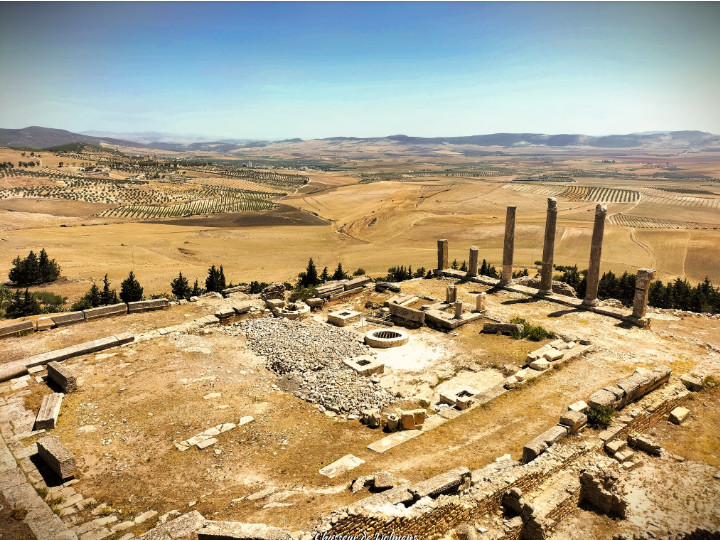
The Temple of Saturn stands on the ruins of an earlier Punic sanctuary, blending Roman and Numidian traditions. Dedicated to the god of agriculture and wealth, it overlooks the valley with majestic serenity. The temple’s foundations and columns bear witness to centuries of devotion and the syncretism of Mediterranean cultures at Dougga.
Libyco-Punic Mausoleum
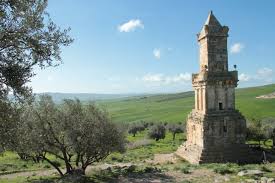
The Libyco-Punic Mausoleum, dating from the 2nd century BC, is one of North Africa’s most remarkable pre-Roman monuments. Built to honor a Numidian prince, it combines Punic, Egyptian, and Greek styles. Its three-tiered structure once held inscriptions in Punic and Greek, offering a rare glimpse into the cultural diversity of ancient Numidia.
Wind Rose Plaza
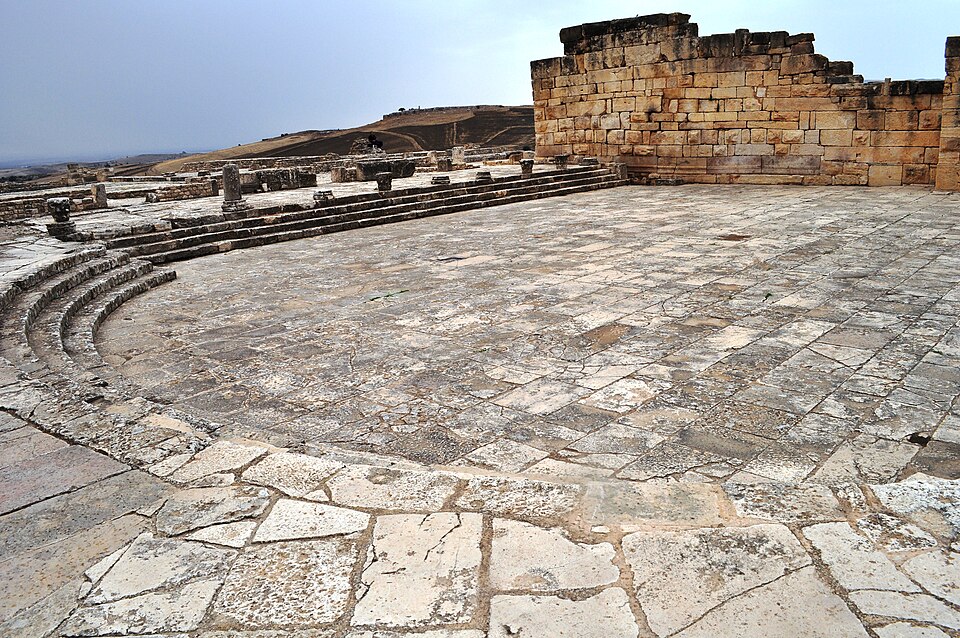
At the center of Dougga lies the Wind Rose Plaza, a circular space engraved with a compass rose still visible today. It once guided citizens through the city’s main axes, linking temples, markets, and baths. A fascinating symbol of Roman urban planning, it reveals the precision and organization that defined ancient Dougga’s civic life.
Licinian Baths
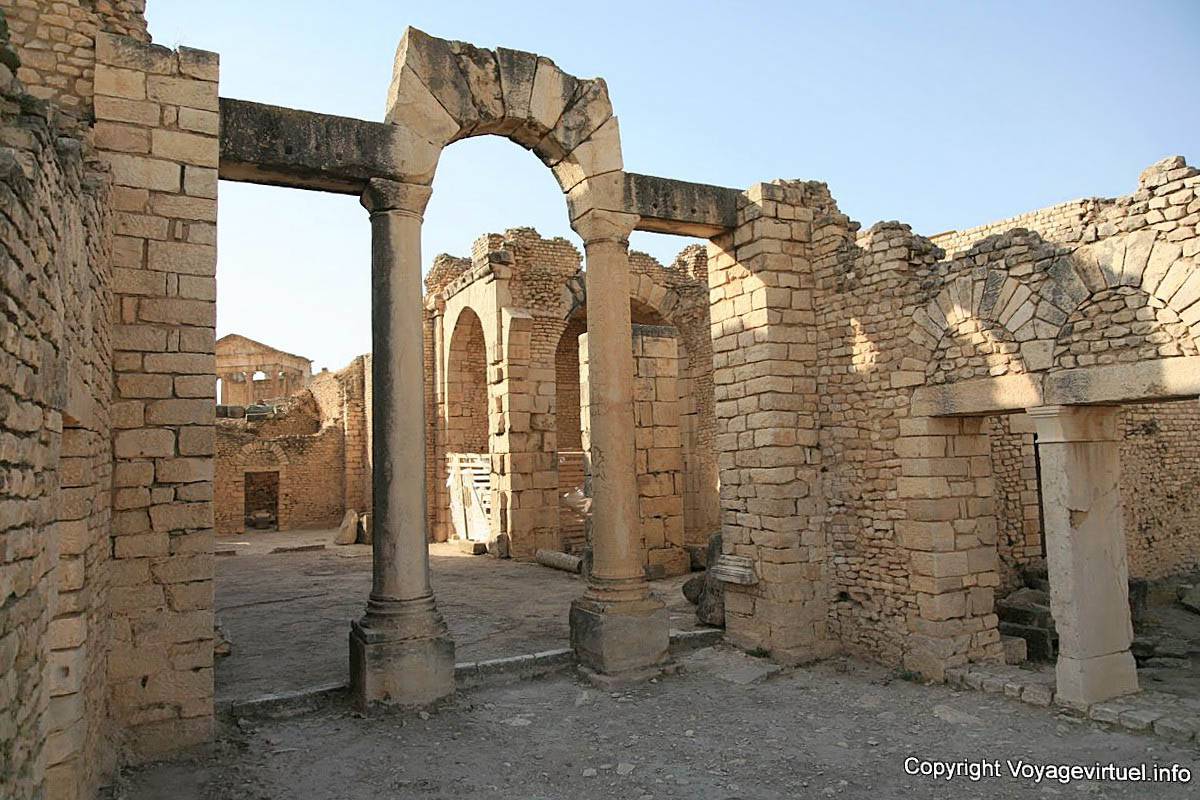
The Licinian Baths offered Romans a refined place for relaxation and social life. With frigidarium, tepidarium, caldarium, and mosaics still visible today, they illustrate the sophistication of public hygiene and leisure in antiquity. The thermal complex demonstrates how Dougga blended luxury, engineering, and daily ritual in a stunning architectural ensemble.
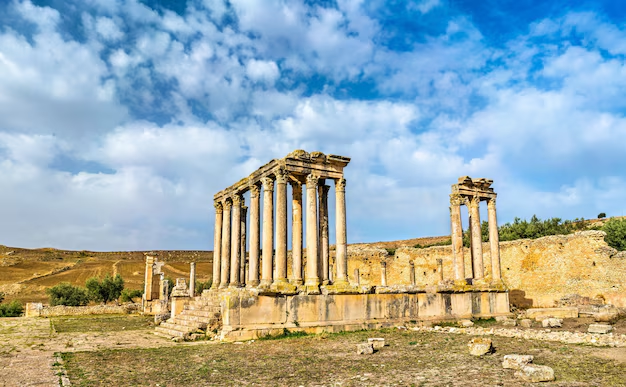
Temple of Juno Caelestis
Standing on a hilltop, the Temple of Juno Caelestis celebrates the goddess of marriage and fertility. Surrounded by porticos and columns, it served as a sanctuary where processions and offerings were made. Its graceful proportions and panoramic views make it one of Dougga’s most poetic and spiritually charged monuments.

Temple of Caracalla & Arch
Erected in honor of Emperor Caracalla and his family, this temple and triumphal arch reflect Rome’s imperial power and local loyalty. They hosted ceremonies of devotion to the emperor, blending politics and religion. Today, the ruins remain a powerful reminder of Dougga’s integration within the vast Roman Empire’s cultural orbit.